
Indio Gigante Care & Feeding Guide
The Indio Gigante is the 'Lambo' of the chicken world — exceptionally tall, strikingly beautiful, and a true project in engineering. Native to Brazil, these birds are prized for their prehistoric aesthetic and staggering height: roosters measure 41 inches or more from beak to toe (the breed's official "stretched" measurement), standing roughly 28–32 inches tall naturally. Because they carry significant weight on long, lever-like legs, their physical demands are unique, requiring a shift in mindset from standard 'farming' to 'specialized husbandry.'
Essential Supplements
Vitamin D3 & Sunlight: Giant breeds need vitamin D3 to properly absorb calcium and phosphorus and build bone. Daily outdoor time is the most natural source; it matters more for this breed than almost any supplement you can buy.
B-Complex Vitamins: B-vitamin deficiencies are a documented cause of leg problems in growing poultry — riboflavin deficiency is linked to curled toes, and niacin deficiency to bowed legs and enlarged hocks. Brewer's yeast sprinkled on feed is an excellent natural B-complex source, and the one supplement we recommend without hesitation.
A Note on "Joint Cocktails": You'll see glucosamine and MSM supplements widely recommended for giant breeds online. We no longer recommend them: there is no published evidence they benefit poultry. Strong legs in this breed are built with correct protein, correct calcium timing, space to move, and time — not powders.
Calcium vs. Growth & Kidney Health:
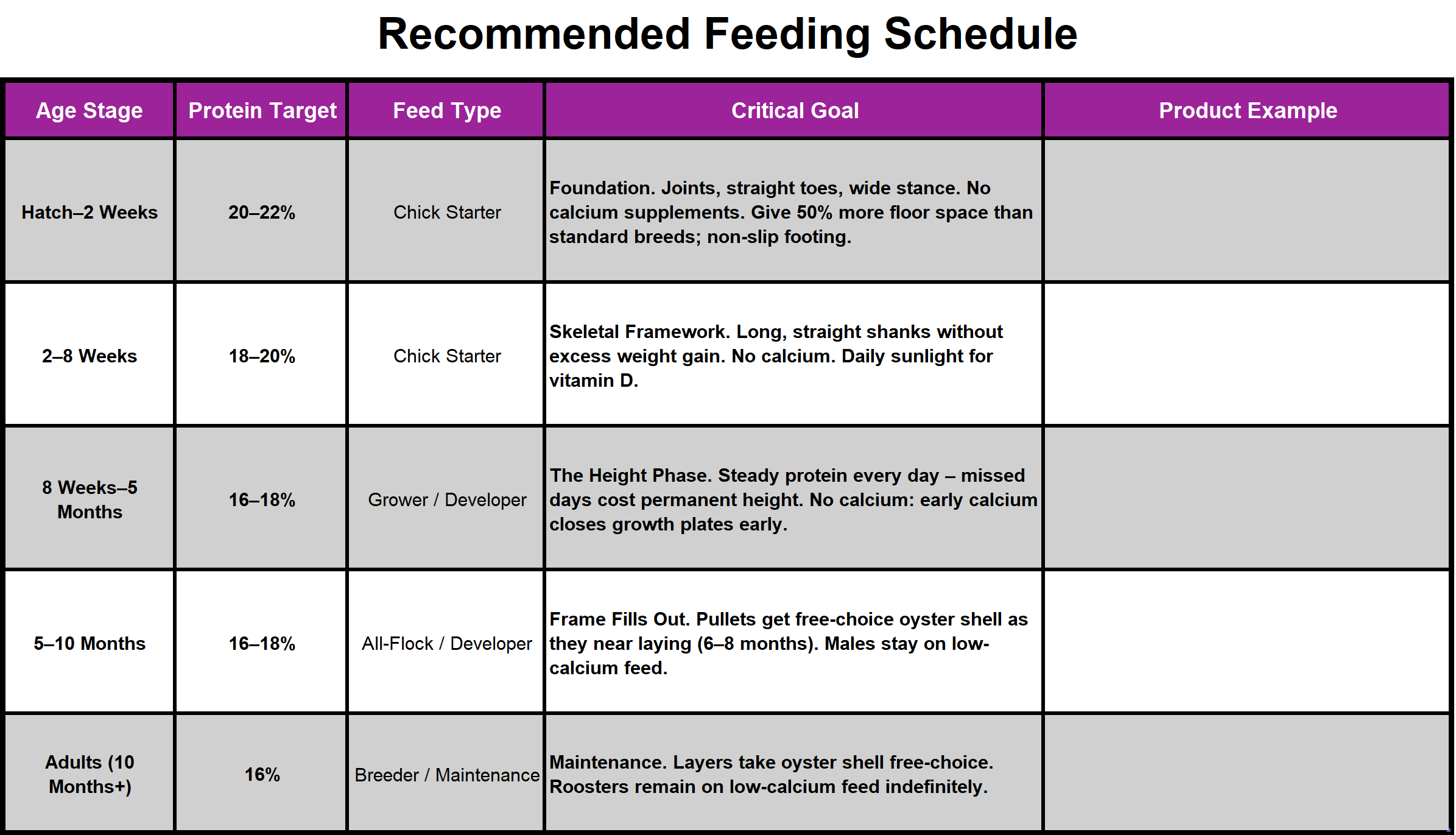
Correction: Do not supplement calcium for growing birds — at all — through 5 months of age. Excess calcium in juveniles can force growth plates to close early (permanently costing height) and can damage kidneys that aren't ready to process it.
Method: Begin offering crushed oyster shell free choice (in a separate bowl) only to pullets as they approach laying age, typically 6–8 months. Hens will take what they need. Keep roosters on low-calcium feed indefinitely — excess calcium serves no purpose in males.
The "Elevated Dining" Rule
Feeder Height: We never feed an Indio Gigante off the floor. It forces them to splay their legs to reach the ground, putting torque on the hips.
Rule of Thumb: Raise feeders and waterers to the height of the bird's back. Adjust this weekly as they grow.
Nutritional Architecture: The "Slow-Grow" Strategy
The biggest mistake new owners make is power-feeding protein to maximize size. Do not do this. Speed kills the Indio Gigante. Índio Gigantes grow up before they fill out: you want steady skeletal growth first, so the frame is strong enough to hold the muscle mass that comes later. Follow the phase feeding schedule below, and don't skip protein days during the 8-week to 5-month height window — growth missed in that window never fully comes back.
A Note on Health & Care: The information provided in this guide is based on our personal experience breeding and raising Indio Gigante chickens, and on the published sources listed below. We are passionate breeders, not licensed veterinarians. The advice here is intended for educational purposes and to share what has worked for our flock. It should not be taken as professional medical advice, diagnosis, or treatment. Always consult with a qualified poultry veterinarian for serious health concerns or before administering medication to your birds.
References & Further Reading
American Índio Gigante Breeders Association (AIGBA), Standard of Perfection (draft — heights and weights not yet finalized by breed-club vote): aigbaofficial.org/sop
Merck Veterinary Manual, Nutrition and Management: Poultry — chapters on mineral and vitamin deficiencies in poultry: merckvetmanual.com
LSU AgCenter, backyard poultry feeding recommendations (protein and calcium by growth phase)
Lohmann Breeders, breeder management guide (change diets by body weight and development, not age alone)
A Note on Health & Care: The information provided in this guide is based on our years of personal experience breeding and raising Indio Gigante chickens. We are passionate breeders, not licensed veterinarians. The advice here is intended for educational purposes and to share what has worked for our flock. It should not be taken as professional medical advice, diagnosis, or treatment. Always consult with a qualified poultry veterinarian for serious health concerns or before administering medication to your birds.